Should parents be concerned about their teens and drug use? According to the Drug Enforcement Agency (DEA), the answer is YES.
That’s because the drug landscape is dramatically different from when you were a teen or even from a few years ago. You are parenting during the age of fentanyl, a deadly synthetic opioid that is being pressed into fake pills and added to other street drugs.
You may remember a time when parents warned teens about experimenting with drugs, with the assumption that experimentation was risky but not automatically deadly. That is no longer the reality.
Today, many parents are raising teens and young adults in a drug landscape shaped by counterfeit pills, social media drug sales, and illicit fentanyl. In this environment, the risk is not that casual experimentation may lead to a lifetime of substance abuse issues. The risk is now that the first time could be fatal.
A teen or young adult may think they are taking Adderall to study, Xanax to calm down, or a pill to have fun at a party. What they may actually be taking is a counterfeit pill containing fentanyl.
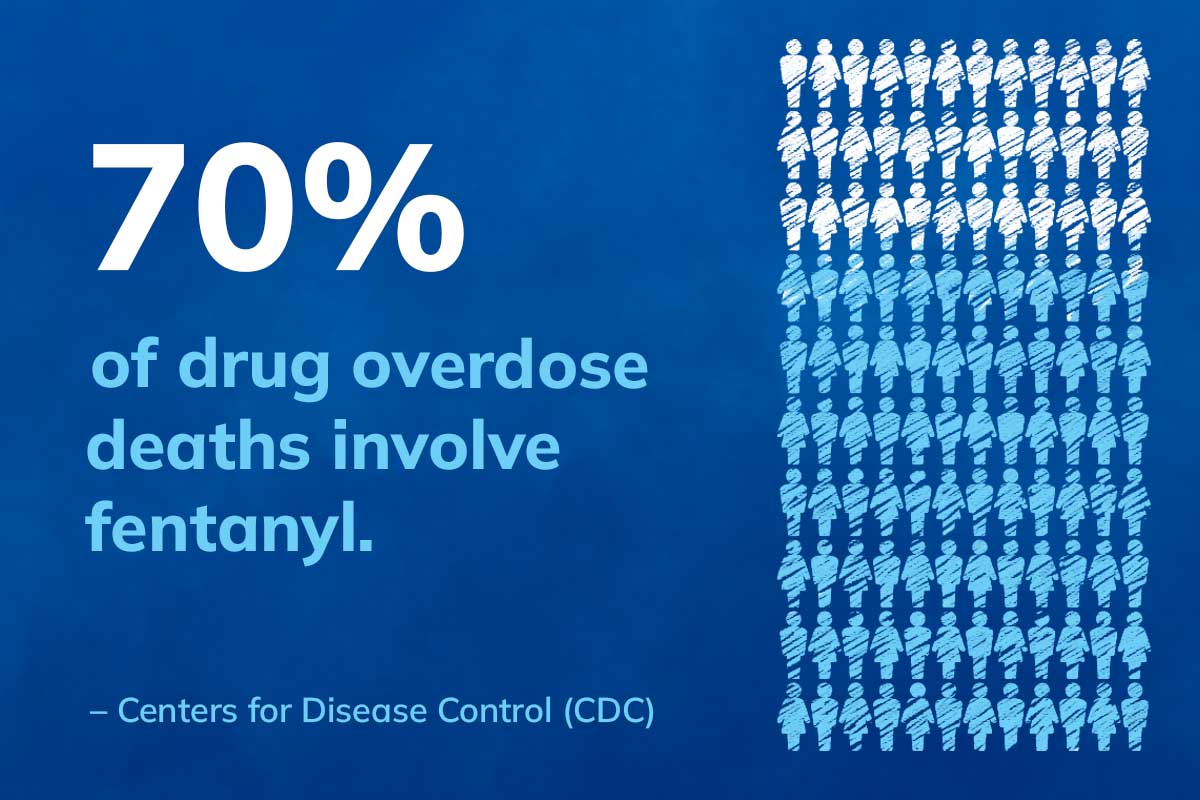
Fentanyl remains a major driver of overdose deaths in the United States.
The CDC reports that approximately 3 out of 4 overdose deaths involved an opioid: 69% of all overdose deaths involved synthetic opioids, primarily illegally made fentanyl and fentanyl analogs.
The CDC also notes that overdose deaths involving multiple drugs have increased, which matters because many young people are exposed to fentanyl through counterfeit pills or other drugs they do not think of as opioids at all.
In the age of fentanyl, experimentation can turn fatal quickly. Here is what parents need to know to help protect teens and young adults from this lethal threat.
What Is Fentanyl?
Fentanyl is a synthetic opioid analgesic that is 50 to 100 times more potent than morphine.
Fentanyl does have legitimate medical uses. It has long been used in health care settings for severe pain, such as pain after surgery, cancer pain, and other serious pain conditions that do not respond well to other medications.
But most fentanyl driving today’s overdose crisis is not prescription fentanyl.
Non-medical fentanyl, also known as illicitly manufactured fentanyl (IMF), made for the illegal drug market, has become a significant contributor to the opioid epidemic due to its high potential for misuse and overdose.
Unlike natural opioids derived from the opium poppy, fentanyl is entirely man-made. Its synthetic nature enables mass production at lower cost, leading to widespread illicit manufacturing and distribution.
Why Should Parents Be Concerned About Fentanyl?
As a parent, understanding fentanyl is crucial because it’s not just affecting habitual drug users.
Teens experimenting with drugs, even just once, are at risk.
Parents should be concerned because fentanyl is not only affecting people with long-term opioid use. It is showing up in counterfeit pills and in other illicit drugs, including cocaine and methamphetamine.
CDC reports that overdose deaths increasingly involve multiple substances.
Approximately 33% involved cocaine, 34% involved psychostimulants such as methamphetamine, and 11% involved non-opioid sedatives like benzodiazepines.
Teens may have no idea that the pill they are taking contains a potentially fatal dose of fentanyl.
DEA lab testing revealed that six to seven out of every ten fake pills contained a potentially lethal dose of fentanyl. That includes counterfeit opioids as well as faked versions of anti-anxiety medications such as Xanax, ADHD medications such as Adderall, and other prescription and non-prescription pills.
Whether it’s experimenting with an illegal drug such as cocaine, heroin, or MDMA, or taking a pill they believe to be a legitimate prescription medication, your teen’s first experience with drugs could be fatal.
They may think they are taking a study drug, a party drug, or a pill from a friend. They may believe they are making a low-risk choice. In reality, they may be taking a counterfeit product with fentanyl in it.
What Is Fentanyl Used For?
In medical settings, fentanyl is used to manage severe and chronic pain, particularly in cancer patients or individuals recovering from major surgery. It works by binding to the body’s opioid receptors in the brain and spinal cord, reducing pain perception and producing euphoria.
Fentanyl has been used for medical purposes since the 1960s and quickly became one of the most commonly used intraoperative analgesics (medications used to control pain during surgery) in the United States.
Fentanyl was prized for its flexibility — it can be administered intravenously, transdermally, and transmucosally — and its potency. Because fentanyl is so potent, only a small amount is needed in medical settings to achieve its desired effect.
While fentanyl has legitimate medical applications, its potency requires careful monitoring by healthcare professionals to prevent misuse and dependence.
It’s this same potency that makes fentanyl prized for illicit manufacturing, and so incredibly dangerous for non-medical use.
What Is Fentanyl Made From?
Fentanyl is a synthetic drug. It is made in laboratories from chemical ingredients found in common industrial chemicals, rather than derived from the opium poppy. NIDA explains that fentanyl is made entirely in laboratories and has no natural ingredients.
Illicit fentanyl manufacturers receive these chemicals the same way you order merchandise and supplies: by mail order.
In a shocking special report, Reuters used a smartphone and $3600 to order the exact chemicals needed to manufacture $3M worth of illegal fentanyl. Many of the substances arrived in packages that appeared to contain cheap household goods, such as pet food, shampoo, and hair accessories.
Once the chemicals are on hand, illicit fentanyl makers can put them together in crude labs in less than a day.
Parents do not need a chemistry lesson to understand the real takeaway: illicit fentanyl is manufactured for the illegal drug supply, not for safety, consistency, or medical care.
There is no quality control, no standardized dose, and no reliable way for a teen to know what they are getting.
How is Fentanyl Getting Into the Hands of Teens?
The chemicals and tools needed to make fentanyl are shipped from other countries. Nearly all of the illicit fentanyl trafficked into the United States is made in labs by crime syndicates and drug cartels. These labs are in rural areas and in apartments and houses without sanitary controls or safety oversight.
Fentanyl is then sent to post-production facilities where it is mixed with sugars, common painkillers like acetaminophen, and chemical binders and pressed into counterfeit pills. Fentanyl powder is mixed with other substances to bulk it up and decrease its potency.
The illicit fentanyl makes its way from cartel-owned labs to gangs and street crews and into the hands of teens who have no idea just how dangerous experimentation can be.
Fentanyl reaches teens and young adults through several paths:
- Counterfeit pills that look like legitimate medications.
- Contamination of other drugs, including cocaine, methamphetamine, and powders sold recreationally.
- Direct drug sales through social media and messaging apps.
Ordering Drugs on Smartphones and Social Media
It’s never been easier for teens to get access to fake prescription pills or illicit street drugs, which are available via popular social media platforms.
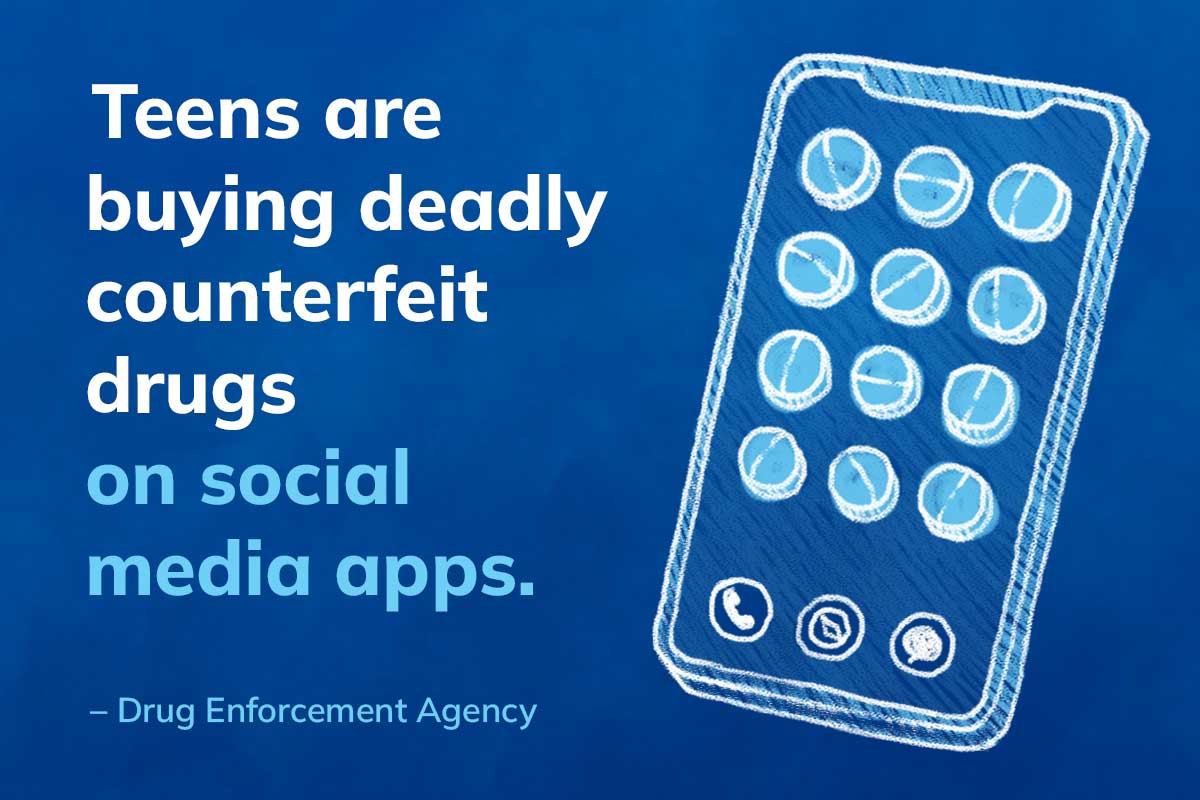
The DEA has warned that social media drug trafficking particularly affects adolescents and young adults because of how often they use these platforms. Drug sales now happen in spaces that feel familiar to teens, including apps they use every day to socialize.
Amy Neville experienced a horror that no parent should: she found her 14-year-old son, Alex, lying dead on a bean bag chair in his bedroom after being fatally poisoned by fentanyl. The young teen had begun experimenting with counterfeit opioids and other drugs that he obtained from a social media site.
Drug dealers are no longer hiding in back alleyways or on the dark web. For parents, this is one of the biggest mindset shifts. Drug access no longer depends on a teen knowing the “wrong crowd” in person. In many cases, it can look more like ordinary online behavior: a message, a payment, a drop-off, a delivery.
The DEA is warning parents of the threat of drug trafficking over social media.
Deadly drugs can be purchased and delivered to your teen at home, just like any other good or service.
Why Is Fentanyl So Dangerous?
Fentanyl brings with it three fatal risk factors.
The primary fatal risk of fentanyl is potency. Fentanyl is dangerous because it is extremely potent, acts quickly, and is often present without the user’s knowledge. Even a small amount can cause a fatal overdose, and as little as 2 milligrams can be fatal for most people. That’s the equivalent of a couple of grains of salt.
The next fatal risk of fentanyl is consistency. A prescription pill will always contain a consistent amount of its active ingredient. A legitimate, legal pharmaceutical company has systems in place to ensure quality consistency, as well as safety and efficacy.
However, drugs made in illicit manufacturing facilities do not have the same standards for consistency and safety.
Officials call this the chocolate chip cookie effect. Imagine baking a batch of chocolate chip cookies. You bring the ingredients together, stir in the chips, and bake the batch. The number of chocolate chips can vary wildly from cookie to cookie and even from bite to bite. You may get one bite of a cookie with one chip, while another bite offers a mouthful of chocolate.
This visual can help you — and your teen — better understand how inconsistent the amount of fentanyl found in illicit street drugs or counterfeit pills can be. One pill could contain a trace amount; the next pill from the very same batch could contain a lethal dose.
The DEA has reported that 6 to 7 out of 10 counterfeit pills seized contain a potentially lethal (2mg) dose of fentanyl. However, some pills tested contained up to 8 mg of fentanyl: that’s 4x the lethal amount.
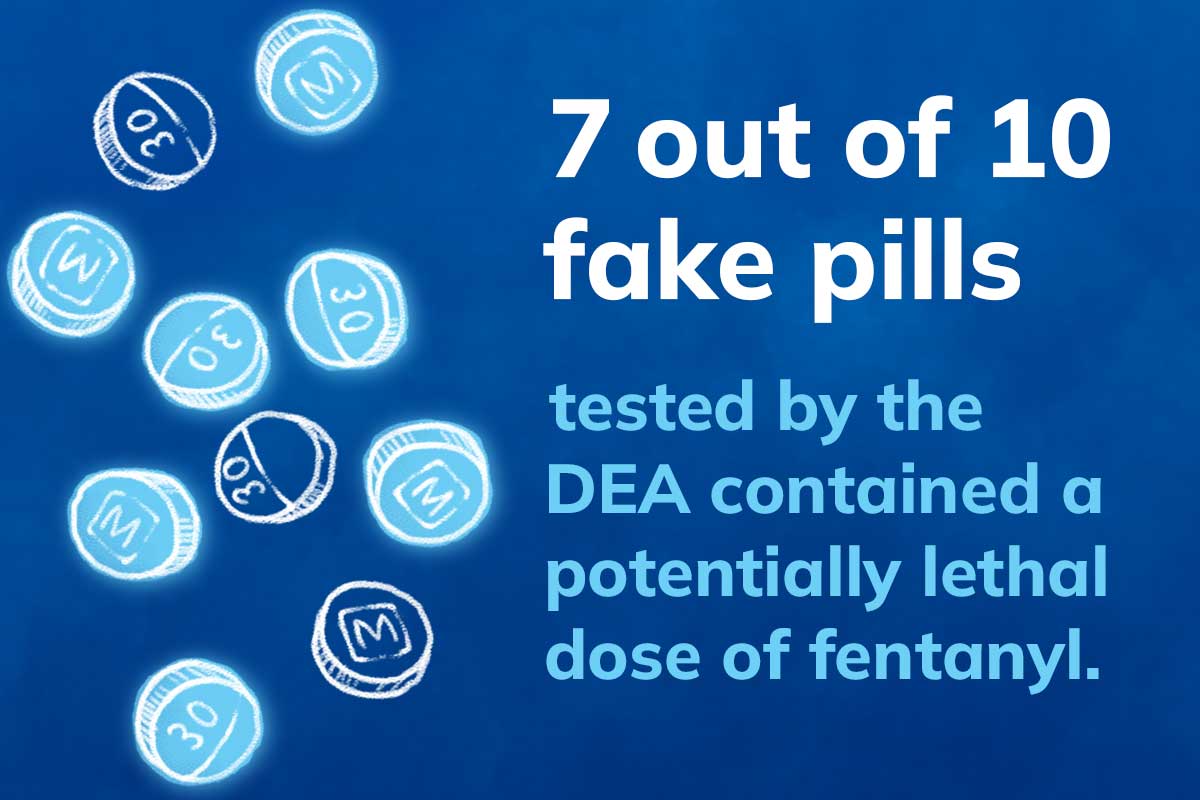
There is no way for your teenager to tell if a single counterfeit pill will contain the tiniest trace amount of fentanyl, a lethal dose, or a dose that’s 4x as deadly.
The final fatal risk of IFM is deception. Your teen may not even know they’re taking a counterfeit pill. They could be told they’re receiving a legitimate prescription opioid, anti-anxiety, or ADHD medication, with no understanding of the danger it holds.
What Does Fentanyl Look Like?
Counterfeit pills or illicit street drugs may contain deadly levels of fentanyl, and your teen wouldn’t be able to see it, taste it, or smell it.
Fentanyl can appear in different forms. It may be found as a powder, pressed into counterfeit pills, or mixed into other drugs. According to the DEA, IFM is sold as powders, nasal sprays, and pressed into pills made to look like legitimate prescription medications.
The problem for parents and teens is that fentanyl usually cannot be identified by sight, taste, or smell when it is mixed into another drug or pill. You cannot tell whether a pill or drug contains fentanyl by looking at it, tasting it, or smelling it.
That is why visual inspection is not a safety strategy.
It is nearly impossible to tell if drugs have been mixed with fentanyl unless those drugs are tested with fentanyl test strips.
What Color is Fentanyl?
Fentanyl itself is typically a white powder, but its appearance can vary when mixed with other substances. Your teen is not likely to have a small bag of straight fentanyl at home.
What they may have is a small blue pill that mimics a prescription painkiller, like Oxycodone.
Or they may have a small bag of (white or off-white) powder: cocaine cut with fentanyl.
MDMA that’s laced with fentanyl may look like small, candy-colored tablets or pills.
Illicit fentanyl can be found in several forms:
- Powder: White or off-white
- Pills: Can mimic prescription medications like oxycodone.
- Blotter Paper: Similar to LSD tabs.
- Colored Pills or Powder: Sometimes dyed to distinguish batches or mimic other drugs, like “pink cocaine.”
It’s nearly impossible to identify fentanyl itself or the drugs or pills that contain fentanyl visually.
This unpredictability adds another layer of danger.
What Is the Street Name of Fentanyl?
Fentanyl is known by various street names, which can make it challenging for parents to recognize when it’s being discussed.
Street names change quickly and can vary by region, peer group, or online market. Some older slang terms have been associated with fentanyl, but parents should be cautious about relying too heavily on a static list. It is often more useful to focus on behavior, secrecy, unexplained pills, unusual packaging, and online activity than to assume a teen will use a specific slang term.
In 2026, the bigger concern is understanding how fentanyl is hidden in counterfeit pills and mixed into other drugs without clear labeling.
Behavioral Signs of Teen Substance Use
Because teens are inadvertently getting exposed to fentanyl when taking other illicit drugs or counterfeit prescription pills, it can be helpful for parents to understand the signs of teen substance use.
Behavioral changes that are interfering with schoolwork, social activities, or behavior at home may be indicators of teen substance abuse.
Warning signs may include:
- Suddenly getting bad grades or a loss of interest in school activities.
- A rapid, unexplained change of friends.
- A lack of interest in appearance or clothing.
- Evidence of lying, stealing, or spending money but having nothing to show for it.
- Sudden or unusual mood changes, especially depression, anger, and aggression.
- Changes in sleep patterns or appetite
- Physical signs of drug or alcohol dependence, such as intoxication or hangovers.
Fentanyl Effects and Signs of Fentanyl Overdose
Like other opioids, fentanyl can cause drowsiness, confusion, slowed breathing, pinpoint pupils, and loss of consciousness. The most dangerous effect is respiratory depression, which means breathing becomes dangerously slow or stops.
Possible signs of an opioid overdose include:
- very slow, shallow, or stopped breathing
- limp body
- pale, gray, or bluish skin, lips, or nails
- pinpoint pupils
- choking or gurgling sounds
- inability to wake the person
- loss of consciousness
The presence of three or more of these symptoms, such as coma, pinpoint pupils, and respiratory depression, is strongly suggestive of opioid poisoning.
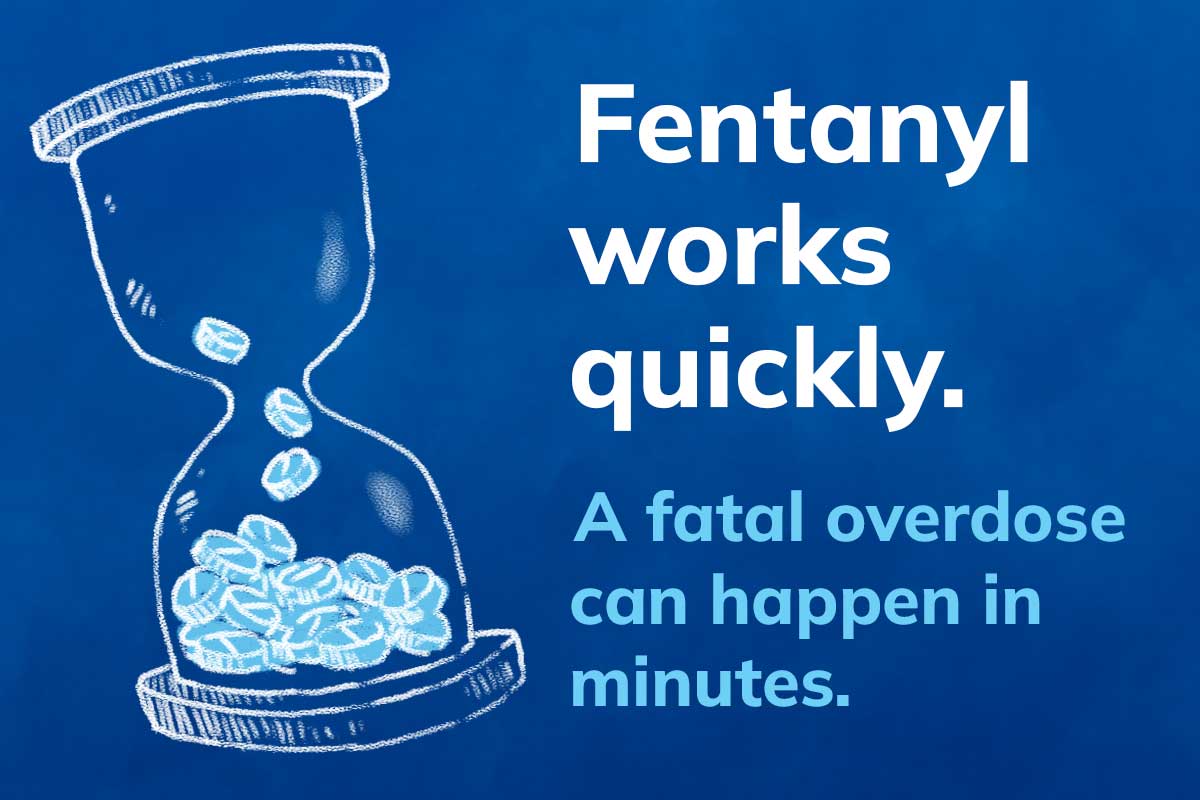
Fentanyl acts quickly. Its effects can be felt within minutes. This rapid onset increases the likelihood of overdose because it can cause immediate respiratory depression (breathing can slow or stop immediately).
Combined with the potential for delayed emergency response, the quick progression leaves little time for life-saving interventions.
When it comes to getting help for a fentanyl overdose, any delay could be deadly. That is why parents, caregivers, and even older teens need to know what an overdose looks like and what to do right away.
What to Do if You Suspect a Fentanyl Overdose
Fentanyl can cause breathing to slow or stop, decreasing the amount of oxygen that reaches the brain (hypoxia). This can lead to a coma, permanent brain damage, or death.
If you suspect your teen is experiencing a fentanyl overdose or opioid poisoning, call 911 immediately.
Having opioid overdose medication like naloxone on hand could help save a life in the event of an opioid or fentanyl overdose. In case of an opioid overdose, rescue breathing can keep someone alive until help arrives, even if you don’t have naloxone.
Can Naloxone Help a Fentanyl Overdose?
Naloxone is a medicine that can help treat an opioid overdose when given right away. It works by rapidly binding to opioid receptors and blocking the effects of opioid drugs.
Naloxone is available as an injectable and as a nasal spray. Naloxone is available in all 50 states. State laws vary, but in most cases, it can be obtained at a pharmacy without a prescription. Friends, family, and others in the community can use the nasal spray versions of naloxone to save someone who is overdosing.
It’s important to know that fentanyl is stronger than other opioids, such as morphine or heroin, and treating a fentanyl overdose may require multiple doses of naloxone.
If you can obtain naloxone at a pharmacy in your state, having multiple doses on hand may save your teen’s life if they experience an opioid overdose, including a fentanyl overdose.
Find your state’s naloxone access rules here.
If you suspect your teen may be experimenting with illicit drugs or prescription pills, you may consider having an opioid overdose medication on hand.
How to Protect Teens in the Age of Fentanyl
It’s time to talk to your teens about fentanyl.
Conversations with your teens about drugs and the risk of overdosing are critically important in the age of fentanyl.
- Pick a neutral time with no distractions.
- Be open and calm.
- Be prepared and focus on the conversation.
- Give teens the scientific facts and explain the reality and risks of using drugs.
- Educate teens on naloxone, including how to use it and where to get it.
- Express your love and care.
Fentanyl Facts for Teens
- Fentanyl is responsible for the majority of drug overdose deaths.
- Fentanyl is used to create fake pills and is added to street drugs to make them more potent and cheaper to produce.
- 7 out of 10 fake pills contained a potentially lethal dose of fentanyl.
- 2mg of fentanyl (the amount of a few grains of salt) can be lethal. Many fake pills tested contained up to 4x a lethal dose.
- It is impossible to identify fentanyl by sight or smell. It is an invisible threat.
- Prescription drugs are not “safer” than street drugs; both may contain fentanyl.
- Fake pills can look identical to their prescription counterparts.
- Never take a pill that was purchased off social media.
- Never take a prescription medication that wasn’t prescribed for you by your doctor.
- Fentanyl test strips may help determine if a pill or drug contains fentanyl.
- Fentanyl is fast-acting; overdose can occur in minutes.
- In case of a fentanyl overdose, calling 911 immediately is critical.
- Naloxone may help treat an overdose.
Be Responsible with Prescription Medications
Many parents are unwittingly supplying their teens with prescription opioids simply by leaving their medications unlocked and easily accessible at home. Studies have revealed that the majority (80%) of heroin users started by misusing prescription painkillers they got from friends, family members, and unsecured medicine cabinets.
- Secure your prescription medications at home in a medication lock box
- Dispose of your prescription meds when they are no longer needed
Whether or not you suspect that someone has been stealing your prescription meds, securing opioids and other potent pills can help keep your teens safe.
What’s Worse than Fentanyl?
Fentanyl is a synthetic opioid that poses a significant public health risk, but it is not the only threat to your teenager’s health and safety. Officials warn of these other substances that could lead to overdose death:
What is Xylazine?
Xylazine has been detected in a growing number of overdose deaths, often in combination with fentanyl, cocaine, heroin, and other drugs. Xylazine, also known as “tranq,” is a veterinary tranquilizer, non-opiate sedative, pain reliever, and muscle relaxer. When combined with fentanyl or other synthetic opioids, xylazine can increase the potential for fatal overdoses. Xylazine can slow breathing, heart rate, and blood pressure to dangerously low levels. Overdose reversal medications like Naloxone do not reverse their effects.
What are Nitazenes?
Nitazene is a synthetic opioid developed in the 1950s but never approved for use due to its potency. Like fentanyl, nitazenes are cheap to manufacture in a lab and are extremely potent: nitazene can be many hundreds of times more potent than morphine. Nitazenes are structurally unrelated to opioids but bind to the same opioid receptors, resulting in pain relief and euphoric effects. And, like other opioids, nitazene can suppress the respiratory system and result in death. Unlike other opioids, these fatal effects can occur at much lower doses.
Fentanyl: One Pill Can Kill
Using prescription pills that weren’t prescribed to you can be deadly, warns the DEA. Fake pills and street drugs are more than likely to be adulterated by fentanyl, and this potent and pervasive synthetic opioid is involved in most drug overdose deaths.
For teens who may be tempted to experiment with prescription pills, counterfeit pills, or street drugs, the message needs to be clear: in the age of fentanyl, one pill can kill.
Parenting teens can feel difficult even without the risks of fentanyl poisoning and potential overdose. Talk to your teen about the risks of drug use and the reasons why teens use drugs. Have ongoing conversations about the dangers of fentanyl, peer pressure, and the pressures they face that may lead to thoughts of experimentation.
Lock up your prescription medications and dispose of prescription pills when they’re no longer needed. Understand the signs of opioid use and overdose, and consider keeping opioid overdose reversal medication available in your home.
Fentanyl FAQs
What Is Fentanyl?
Fentanyl is a powerful — and deadly — synthetic opioid that is 50x more potent than heroin. It has become a major contributor to opioid overdose deaths, as it is pressed into fake pills and cut into street drugs, including heroin and cocaine.
What Is Fentanyl Used For?
Medically, fentanyl is used to treat patients with severe or chronic pain, especially after surgery or for advanced cancer pain. It works by binding to the body’s opioid receptors, reducing pain sensation.
What Is Fentanyl Made From?
Fentanyl is synthesized in laboratories from chemical precursors. Unlike natural opioids derived from the opium poppy, fentanyl is entirely man-made using chemical processes.
What Type of Drug Is Fentanyl?
Fentanyl is an opioid analgesic, a type of medication used to treat severe pain. Opioid analgesics work by mimicking the action of endorphins, the body’s natural pain-relieving chemicals.
What Class of Drugs Is Fentanyl?
Fentanyl is classified as a Schedule II controlled substance in the United States. This means it has accepted medical uses but also a high potential for abuse and dependence.
Why Is Fentanyl So Dangerous?
Fentanyl is extremely dangerous due to its high potency; even a tiny amount can be lethal. Illicitly manufactured fentanyl is often mixed with other drugs without the user’s knowledge, increasing the risk of accidental overdose.
How Strong Is Fentanyl?
Fentanyl is about 100 times stronger than morphine and 50 times stronger than heroin. Its high potency makes it effective for severe pain, but also significantly raises the risk of overdose.
What Is a Lethal Dose of Fentanyl?
A lethal dose of fentanyl for most people is estimated to be as little as 2 milligrams. Such a small amount can easily be hidden in other substances, making unintentional exposure possible.
What Is the Street Name of Fentanyl?
Common street names for fentanyl include Apache, China Girl, Dance Fever, Goodfella, Jackpot, Murder 8, and Tango & Cash, among others.
What Color Is Fentanyl?
Fentanyl is typically found as a white powder, but its appearance can vary when mixed with other substances. It can also be pressed into counterfeit pills that mimic prescription medications.
Why Is Fentanyl Added to Drugs?
Drug traffickers add fentanyl to other illicit drugs to increase potency and profitability. This practice is dangerous because users are often unaware of fentanyl’s presence, leading to accidental overdoses.
Why Is Fentanyl So Popular?
Fentanyl is popular among illicit manufacturers because it is cheap to produce, highly potent, and easy to transport in small quantities, making it highly profitable in the illegal drug market.
Where Is Fentanyl Coming From?
Illicit fentanyl is often manufactured in clandestine laboratories, primarily in countries like Mexico and China, before being smuggled into the United States.
What Are the Dangers of Fentanyl?
The dangers of fentanyl include a high risk of overdose and death due to its potency. It can cause severe respiratory depression, and its hidden presence in other drugs increases the risks. For teens experimenting with illicit street drugs or counterfeit opioids, one pill can kill.
This blog post was originally published in 2024. It has been updated for 2026 to reflect current statistics, data, and risks associated with fentanyl.